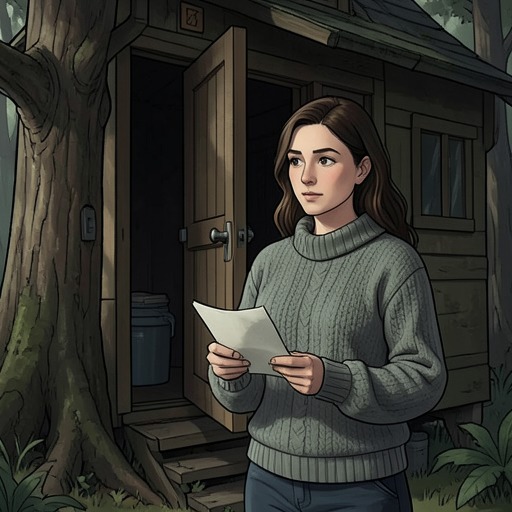
John Ambrose and Lara Jean Resume Correspondence
P.S. I Still Love YouJohn Ambrose and Lara Jean resume correspondence when a letter from eighth grade, sent without Lara Jean’s intention that it ever be read, finally reaches him. Their exchange reconnects two childhood friends through shared memories, but it also brings an old confession back into the present: Lara Jean must face the intensity of her former feelings for John Ambrose and the uncertainty of how those feelings overlapped with her affection for Peter Kavinsky.
The Delayed Letter and Its Return
The exchange begins with a white envelope in the mail at Lara Jean’s home. It arrives on Tuesday, but Lara Jean finds it on Wednesday morning while eating an apple at the kitchen window seat and waiting for Peter Kavinsky to pick her up. Among bills, a catalog, and Kitty Covey’s dog magazine, the envelope stands out: it is addressed in a boy’s handwriting and bears a return address she does not recognize.
John Ambrose explains the delay in his reply. A tree fell in the driveway of his family’s former home, and Mr. Barber, whose family had moved into the house in Meadowridge, came to remove it. He brought John Ambrose the letter, which had been delivered to the old address. The postmark showed that Lara Jean had sent it in September, but John Ambrose had only just received it. A routine mishap in the mail has therefore turned a private, long-buried feeling into a present exchange between the two of them.
Childhood Memories Reopened
John Ambrose’s reply recalls episodes from their childhood with vivid, particular detail. He remembers Lara Jean’s older sister making peanut brittle in the microwave and the children holding a break-dancing contest to decide who would get the biggest piece. He also remembers being locked out one afternoon, going to the tree house, and reading with Lara Jean until darkness made them use a flashlight. When a neighbor grilled hamburgers, Lara Jean dared him to ask for one to share; he was too shy, and later got in trouble because his family had not known where he was. He still considered the adventure worth it.
Lara Jean’s memory fills in and alters the scene. Chris and John Ambrose had both been there, but after Chris left, Lara Jean and John Ambrose were alone. They had become hungry enough to open the Skittles Trevor Pike had hidden under a loose floorboard. Lara Jean remembers the afternoon as an enjoyable spell of being runaways together, not simply as a time when John Ambrose got locked out. The difference between the recollections makes the exchange more than a collection of anecdotes: each letter gives the shared past a new shape by showing what one person kept and how the other remembers it.
John Ambrose also recalls seeing Lara Jean at a Model UN scrimmage at Thomas Jefferson. He was representing the Republic of China, called her name after she dropped off a note, and later tried to find her, but she had gone. Lara Jean confirms that she saw him and had suspected he might be there because she remembered his interest in Model UN. She says she was startled and did not stay to catch up. His observation that she looked the same, though much taller, marks the distance between their childhood friendship and this unexpected encounter.
The Exchange Becomes Deliberate
In her reply, Lara Jean explains that she wrote the letter in eighth grade but never meant for John Ambrose to see it. Writing letters to boys she liked and hiding them in her hatbox was a private habit; the letters were for her alone. Kitty Covey sent them out in September, including John Ambrose’s. What had once been a protected act of private expression has consequently become a real conversation, initiated by a sister’s decision and continued by the person the letter was about.
Lara Jean answers John Ambrose’s memories with others of her own. She thinks Peter Kavinsky probably won the break-dancing contest, and recalls how he always took the last piece of pizza. When Peter Kavinsky and Trevor Pike fought over it, they dropped the pizza and nobody got to eat it. She also remembers the children visiting John Ambrose’s house to say goodbye when he moved: she brought a chocolate cake with chocolate peanut butter frosting, but the family’s forks and plates were already packed, so they ate with their hands on the front porch. Only after getting home did she notice the chocolate staining the corners of her mouth. In writing back, she makes the friendship’s shared history tangible through its small embarrassments, jokes, and farewells.
Lara Jean asks John Ambrose to send the old letter back. The other letters have found their way back to her, and despite anticipating that rereading it will be painful, she wants to know what she wrote. His next letter provides it, along with more of his present life. John Ambrose says that being noticed by girls in the past had seemed to him a consequence of being Peter Kavinsky’s best friend; he remembers Sabrina Fox asking him to the eighth-grade formal and trying to sit beside Peter Kavinsky at Red Lobster. He also describes competing pressures over college: his father favors UNC, his mother wants him to stay in state, while John Ambrose himself hopes to attend Georgetown and is studying for the SATs. These details widen the correspondence beyond nostalgia, showing him as a person with private ambitions and insecurities in the present.
The Old Confession Changes the Present
John Ambrose returns Lara Jean’s letter and asks for her phone number, saying she is difficult to find online. Lara Jean feels relief that he appears not to have seen the video that has unsettled her; she can imagine that he still holds an unaltered picture of her, as she does of him. Yet the request changes the character of their contact. Letters seem harmless to her, while a phone call feels more immediate; choosing paper and pen, addressing an envelope, and sending it by post makes the exchange seem more deliberate and romantic. The correspondence has begun to feel like something to keep.
The returned letter is written on creamy stationery bearing Lara Jean’s engraved initials, a birthday gift from her father. In it, she identifies the beginning of her love for John Ambrose: an autumn day in eighth grade when they had to put away softball bats in the rain. He ran ahead, then stopped to carry her bag; when the rain grew heavier, he whooped, turned back with a grin, and called her along. Lara Jean wrote that she loved him and believed they might have loved each other, while lamenting that his family’s move had taken the decision out of their hands. Seeing those words again makes her feel exposed. She pushes the letter under her bed and decides that John Ambrose will not get it back.
The discovery unsettles rather than settles Lara Jean’s feelings. She had forgotten how ardently and confidently she once believed she and John Ambrose were meant for each other. The letter contains no mention of Peter Kavinsky, even though she liked him during eighth grade too. Their feelings for the two boys therefore overlap in her memory without a clear point at which one began and the other ended. Resuming correspondence restores a connection with John Ambrose, but its decisive consequence is inward: a childhood letter makes Lara Jean question the shape of her own romantic past just as she is trying to understand her present.